




OVERVIEW
The Philippine government has a responsibility to uphold an efficient, effective, and fair course of action in recognizing and responding to the needs of its citizenry. Its strength, as in any institution, is only as good as its ability to hold its intended form and function.
When systems in place fail to address systemic challenges,then they require systemic change.
This year’s theme, “Forging the Future Ahead: Institutional Reforms Amidst the Changing Global Order,” underscores the importance of strengthening institutions—to enable more responsive, inclusive, and adaptive policymaking, especially in a time marked by geopolitical uncertainty, economic insecurity, and ecological crises.
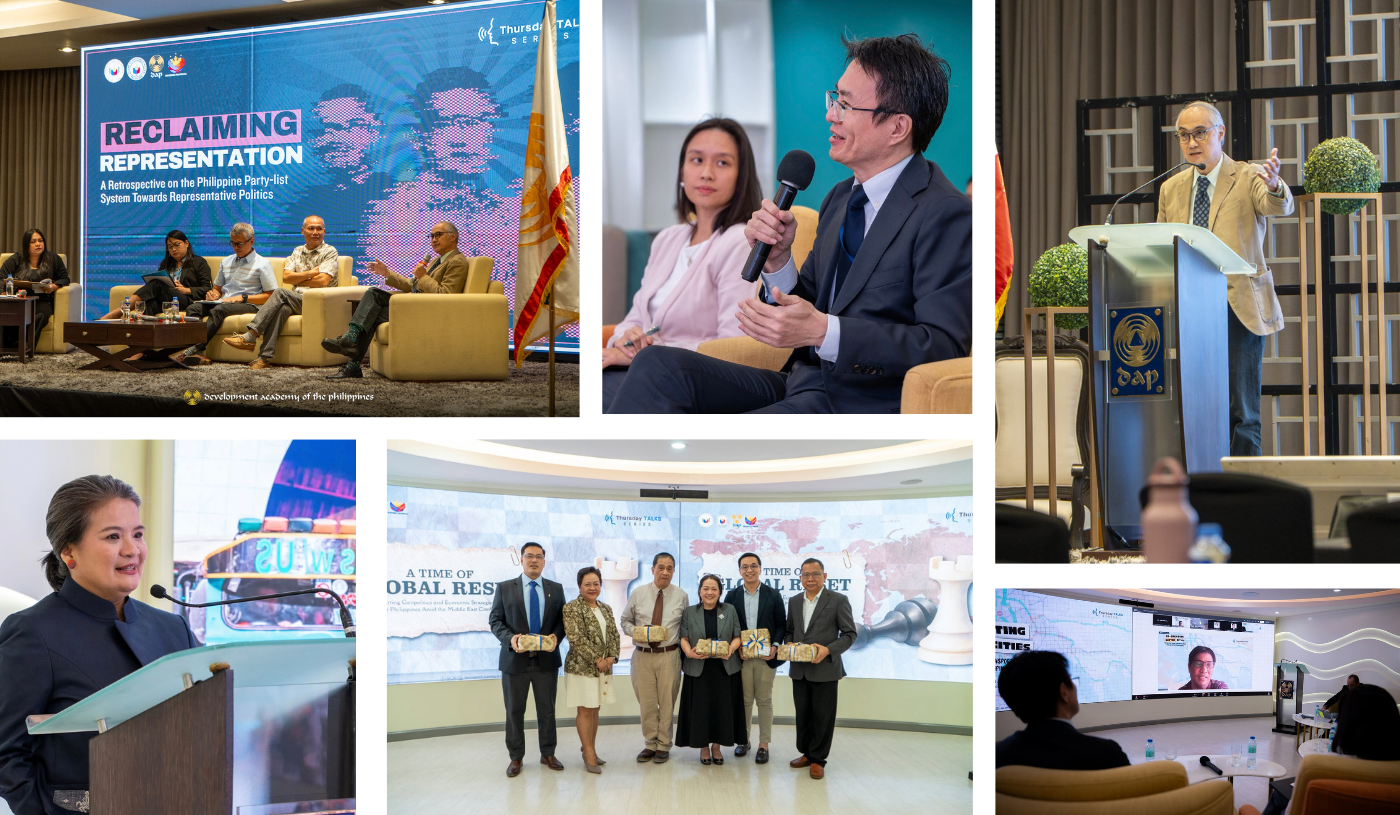
2026 Thursday Talks Series
EPISODE 1: Reclaiming Representation: A Retrospective on the Philippine Party-List System Towards Representative Politics
By discussing how the party-list system has evolved from its inception to today from a multi-sector perspective, the first episode aims to highlight the importance of representative politics in democratic societies, especially in the Philippines. It will also explore recommendations that might help address representational gaps in the country’s political landscape to truly serve the needs and genuine interests of the Filipino people.
EPISODE 2: A Time of Global Reset: Charting Geopolitics & Economic Strategies Amid the Middle East Conflict
The second episode discussed the evolving conflict in the Middle East and its repercussions globally and to the Philippines, as well as helped understand the broader structural shifts in the global order that the crisis reflects. It also aimed to explore how the Philippines can navigate these disruptions through informed policy responses and strategic decision-making.
EPISODE 3: Co-Creating Better Cities: Participatory Urban Transport Planning With and for the Filipino Masses
The third episode will tackle the feedback gap in public transportation planning in the Philippines. As one of the many challenges surrounding the country’s transport landscape, it remains a blind spot that prevents systemic issues and challenges from being brought to light, thereby hindering improvements in the welfare of ordinary Filipino commuters.Ultimately, the lecture seeks to explore policy options that would place people at the center of transport policy planning and implementation, and ensure that everyone gets from Point A to Point B in a more efficient, effective, and humane manner.